Storm Hit? Protect the Property First.
Wind, falling limbs, and sudden leaks can expose your property fast. Call or text our emergency line immediately — temporary protection can be deployed while a permanent solution is planned.
Emergency tarping is available 24/7, subject to crew, site, travel, safety, and weather conditions.
What To Do Right After Storm Damage
Acting quickly limits water intrusion and secondary damage. Follow these steps before anything else — and call us as soon as it is safe to do so.
- Stay safe — do not climb onto a damaged roof or enter areas where structural integrity is uncertain.
- Move valuables away from active leak points if it is safe to do so inside.
- Place buckets or towels to catch dripping water and protect floors and belongings.
- Photograph visible exterior and interior damage from ground level before any cleanup.
- Call or text 203-309-9656 for emergency tarping and a free inspection — document the date and time you noticed damage.
Do not wait to see whether the roof "dries out." Water that enters a structure can affect insulation, framing, and interior finishes quickly. Early documentation and temporary protection are the most practical first steps.
Tarping, Inspection, and Documentation
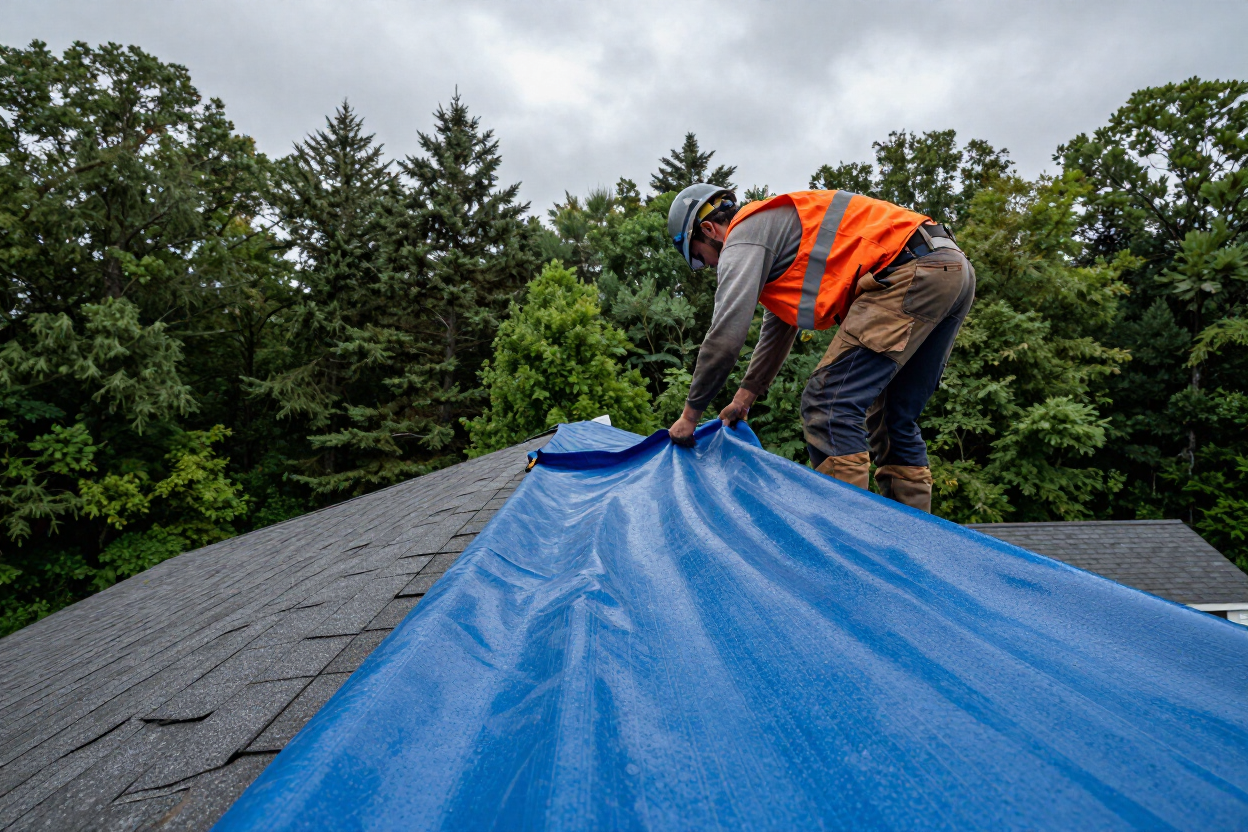
When you call, we deploy temporary tarping to cover exposed roof areas and slow water entry. Our crew secures the tarp, photographs the affected areas, and records visible damage conditions so the full extent is documented before any cleanup begins.
Documentation matters. We photograph visible wind damage, lifted or missing shingles, broken flashings, saturated decking, and any structural concerns accessible from the exterior. This record supports your repair scope and gives you an accurate picture of what happened.
What we document during the emergency visit:
- Affected roof sections and visible penetrations
- Missing, cracked, or displaced shingles
- Flashing condition at ridges, valleys, chimneys, and skylights
- Soffit, fascia, and gutter damage
- Visible interior leak points if access is available and safe
Storm Damage or a Leaking Roof?
Acting quickly can help limit water intrusion and secondary damage. RodyBen7 offers free inspections, emergency tarping, leak repair, and storm-damage service. If a covered event caused the damage, insurance may pay eligible costs, subject to the policy, deductible, exclusions, and carrier decision.
We can photograph visible conditions and provide a repair or replacement scope. We do not promise claim approval, interpret coverage, negotiate a claim, or act as a public adjuster unless separately licensed.
Questions about what your policy covers? Contact your insurance carrier or a licensed public adjuster. We are here to scope and repair the damage.
From Emergency Protection to a Permanent Fix
A tarp stops the immediate problem — it is not a permanent solution. Once the emergency is stabilized, we move quickly from documentation to a full repair or replacement scope, keeping you informed at every stage.
1
Emergency Call & Dispatch
Call or text us. We confirm crew availability, site conditions, and travel, then dispatch for tarping or an urgent inspection.
2
On-Site Documentation
We photograph visible damage, assess accessible areas, and record conditions in detail before any work begins.
3
Written Repair or Replacement Scope
You receive a clear, itemized written scope: affected areas, recommended materials, labor, and price — no vague verbal estimates.
4
Scheduling & Materials
We confirm materials, access requirements, crew scheduling, and any protective measures needed during the work period.
5
Work, Review & Cleanup
We complete the permanent repair or full replacement, walk the job with you, and leave the property clean.
Storm Damage Questions
Common questions from property owners after a storm or wind event — answered clearly and without the runaround.
Can wind damage occur without missing shingles?
Yes. Wind can lift shingle tabs, break the adhesive seal strip, crack or crease the shingle surface, and displace flashing without completely removing any shingles. Sealed-down shingles may look intact from the ground while the underlying bond is broken. A close inspection — including flashing at ridges, rakes, valleys, chimneys, and skylights — is the only reliable way to assess wind damage after a significant storm.What should I document immediately after a storm?
Document the date and time the damage occurred or was first noticed. Photograph the exterior from ground level — roof surface, gutters, siding, and any debris. Photograph interior leak points with timestamps if possible. Avoid disturbing visible damage before the inspection. This record supports your repair scope and can be useful if you file an insurance claim.How does a contractor scope storm repairs?
A contractor inspects accessible roof areas, flashings, penetrations, and adjacent components. We record visible damage, note the affected roofing system elements, and prepare a written scope covering materials, labor, and sequence of work. The scope is based on what is observable — concealed damage found during tear-off may require a scope adjustment.When should I call my insurer after storm damage?
Contact your insurer promptly — most policies require timely reporting of damage. You do not need a contractor's report to open a claim, but having one can help you understand the repair scope before the adjuster visits. Your insurer determines coverage; we determine what the roof needs.What is emergency tarping and how long does it last?
Emergency tarping is a temporary protective measure — heavy-duty polyethylene sheeting secured over exposed or damaged roof areas to slow water entry until permanent repairs are made. A tarp is not a permanent solution; the goal is to protect the structure while materials are ordered and the repair is scheduled. Duration depends on weather, tarp condition, and how quickly permanent work can be completed.Does insurance always cover storm damage?
Not always. Standard homeowners and commercial property policies may cover sudden storm damage, but coverage depends on the specific policy terms, deductible, exclusions, the age and condition of the roof, and the carrier's determination. Wear, deterioration, and maintenance-related damage are typically excluded. Your insurer — not a contractor — decides what is covered.
Request a Storm Inspection
Whether you have an active leak, visible storm damage, or just want a professional assessment before filing a claim — start with a free inspection and a straightforward conversation.